
unlike anything else
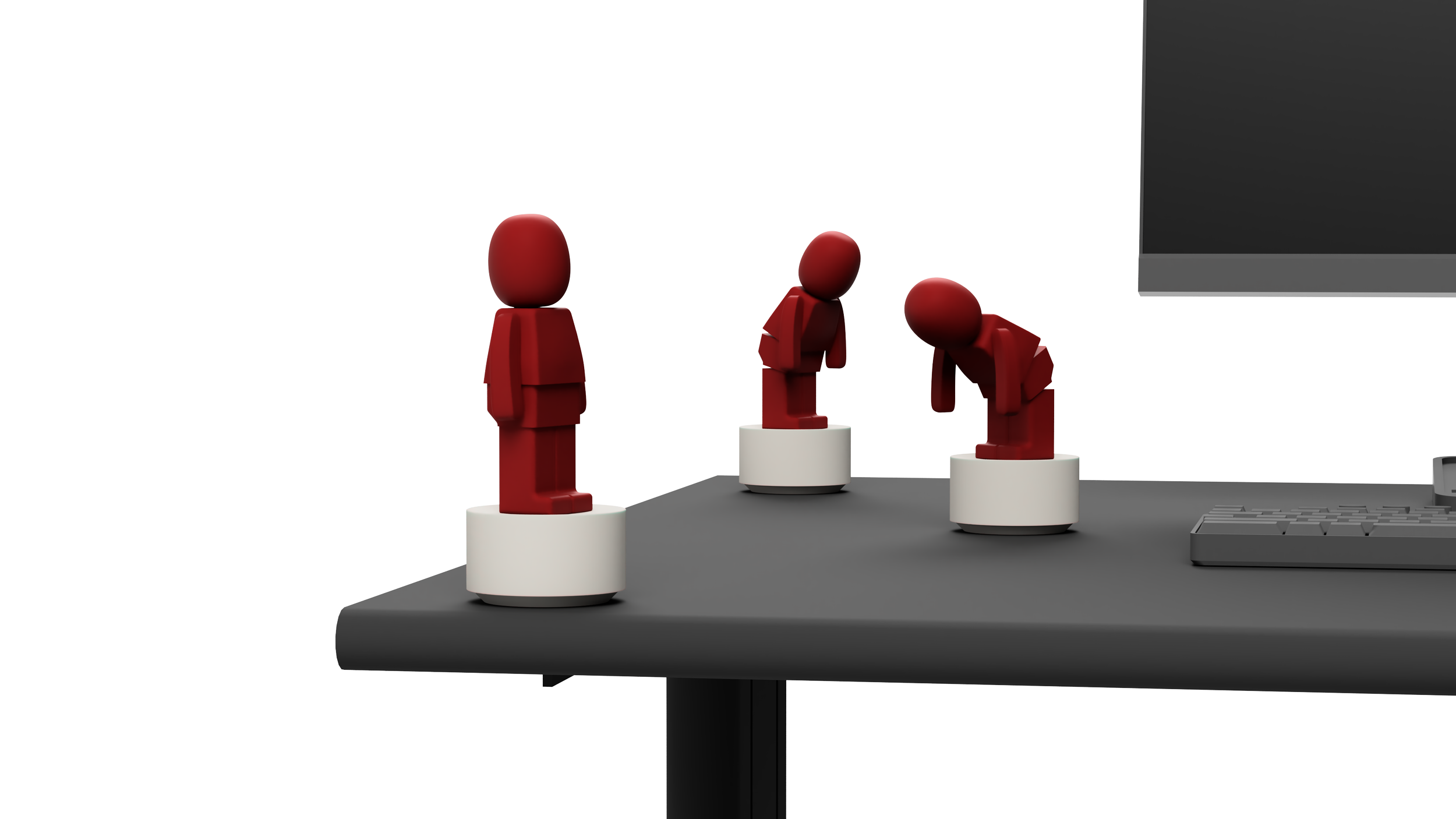
Stan is a small, human-like figure that provides personalized feedback to reduce sedentary behavior.
-
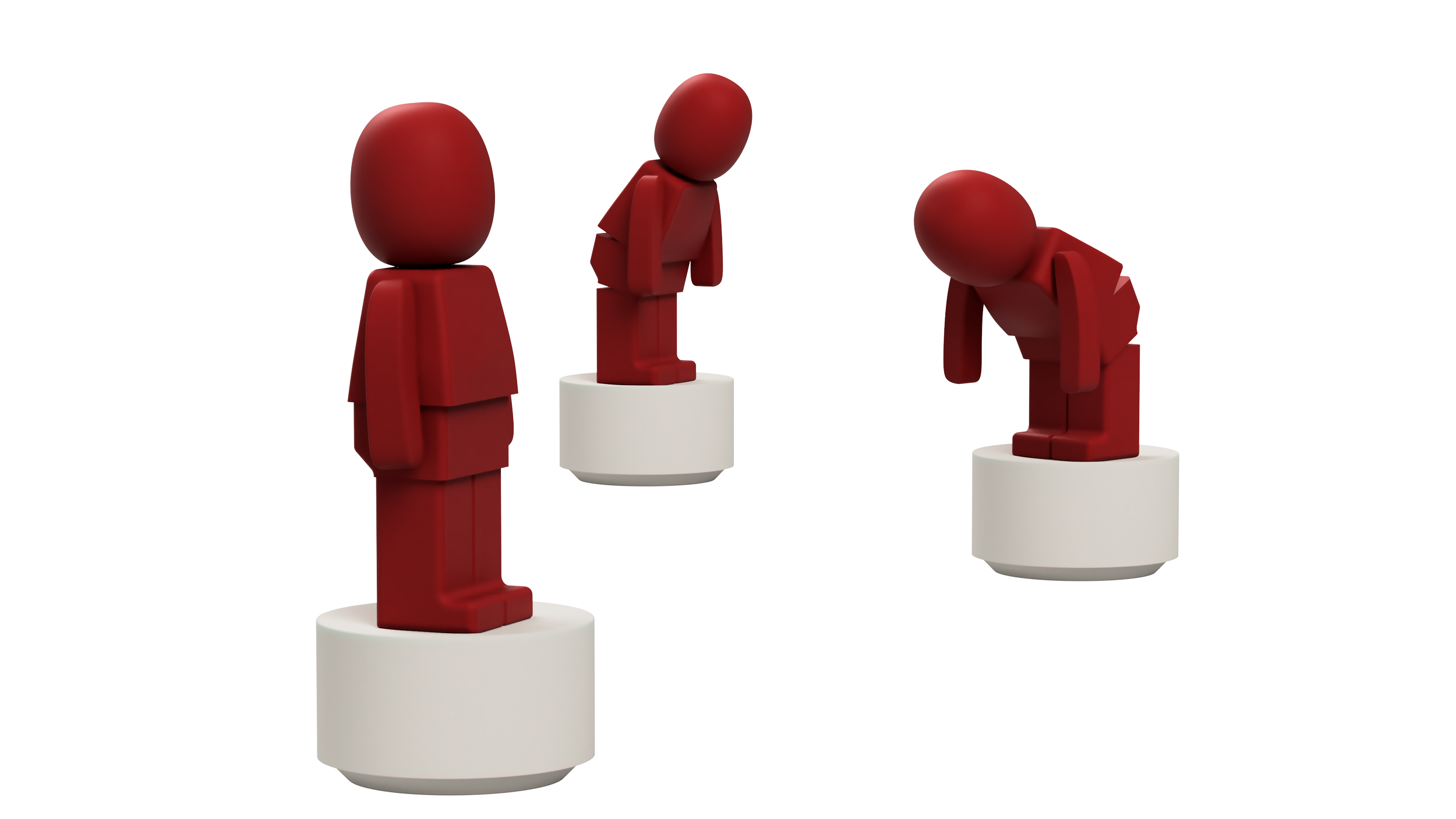
Stan changes position according to user behavior.
1) When you sit for too long, Stan collapses, indicating that it is time to stand.2) When you stand up, Stan will rise with you. When Stan is in a fully upright position, you have achieved the maximum benefit of standing.
-
Sedentary behavior is a silent killer in office environments. Prolonged sitting is linked to numerous lifestyle diseases, including neck and lower back pain, obesity, and diabetes. While many companies invest in standing desks to mitigate sedentary lifestyles, office workers often find it challenging to adopt the healthy habit of standing regularly. Leveraging live data and fundamental principles of behavioral design, Stan provides immediate feedback in an easily understandable and impactful way:
1) Reduce Neck & Back Pain: Alternating between sitting and standing positions is one of the most effective methods to alleviate neck and lower back pain.2) Combat Lifestyle Diseases: Standing increases heart rate and calorie burn, reducing risks associated with sedentary habits such as obesity, diabetes, and cardiovascular disease.
3) Boost Concentration and Productivity: Standing promotes blood circulation, directly enhancing concentration and productivity levels.
-
Stan utilizes live data to deliver personalized feedback. It detects user presence and working position, which a smart algorithm—developed in collaboration with industry experts—then processes to ensure optimal feedback.
Experience Stan in Your Office
Click the button to schedule a demo!
design that works
Stan is built on acknowledged principles of sustainable habit creation.
Stan is designed to help create healthy habits, applying principles of top experts in behavioral design. Stan combines important elements like cues, desires, actions, and rewards, each playing a crucial role in transforming your working habits.
-
Stan's presence on a desk serves as a constant, visible reminder to stand. Its unique, human-like design is deliberately chosen for visibility, making the cue to change position obvious and compelling. Stan provides meaningful presence to information otherwise implicit to the user.
-
The appeal of Stan comes from its capability to reflect the user's posture by providing live feedback. When Stan collapses, it serves as more than just a signal to stand up; it acts as a mirror, displaying the user's current state. This reflective feedback enhances the user's interaction with Stan.
-
Stan removes the burden of remembering to stand. Its user-friendly alerts simplify the task, integrating into user’s workflow. This feedback system helps embed the standing habit into daily routine with minimal disruption.
-
The satisfaction in using Stan comes from its immediate feedback. When the user adjusts their posture from sitting to standing, Stan responds by transitioning from a collapsed to an upright position. This instant change in Stan's stance provides a clear and gratifying indication of the user's healthy behavior.
By applying these well-established principles, Stan successfully integrates sustainable habits into the office, distinguishing it as a uniquely effective tool for promoting lasting behavioral change and reducing sedentary behavior.
Proven Impact
An early pilot project demonstrated stan’s
ability to drive behavioral change amongst its users.
250% Increase in standing time
On average, pilot participants increased their standing time by more than 250% using the product. Before Stan's implementation, data indicated an average standing time of only 8% per day among desk users. However, following Stan's deployment in the office during the pilot phase, this number significantly rose to an average of 28%.
-
Standing time refers to the duration spent at one's desk while in an upright, standing position. It's a measure of active work posture as opposed to sedentary behavior.
-
The Importance of Standing Time
Increasing standing time is essential as it directly counters sedentary behavior, which is known to have several negative health implications. By standing more, we elevate our heart rate, enhance blood flow, and boost calorie expenditure. These physiological changes contribute to mitigating the risks associated with prolonged sitting, such as cardiovascular issues, obesity, and metabolic syndrome.
152% Increase in position switches
The implementation of Stan led to a significant increase of 152% in the frequency of position switches among the pilot participants. Before Stan's introduction, users changed their working position every 2 hours and 15 minutes on average. After Stan was deployed, this interval reduced dramatically, with position switches occurring on average every 53 minutes.
-
A position switch is the action taken when an individual transitions from sitting to standing or vice versa while at the desk.
-
The Importance of Position Switches
Frequent position switches are crucial due to its proven impact on musculoskeletal health. Regularly alternating between sitting and standing helps distribute physical stress, reducing the strain on the lower neck and back. This dynamic movement is associated with alleviating discomfort and preventing chronic pain in lower back and neck. Changing working positions is essential for promoting physical well-being during long work periods.
Research guiding the solution
Experimental Ergonomics data collection report with Technical University of Denmark
A study performed with DTU explores the effectiveness of feedback interventions on reducing sedentary behavior among office workers using sit-stand desks. It found that both individual and team-based feedback significantly increased the time participants spent standing, suggesting that such interventions can effectively mitigate sedentary behavior in office environments. Read more here.
WHO:
guidelines on
sedentary behavior
The WHO Guidelines advocate reducing sedentary time and increasing physical activity to mitigate health risks. A practical way to achieve this is by using standing desks, which can help lower the incidence of chronic diseases, alleviate back pain, and boost productivity. The guidelines recommend 150–300 minutes of weekly physical activity for adults and suggest standing while working as an effective intervention. Read more here.
Why is the office space the perfect place to combat sedentary behavior?
The workplace is a key site for interventions aimed at reducing sedentary behavior, given the extensive time office workers spend seated. The study by Parry and Straker (2013) underscores the necessity of adopting strategies to break up prolonged sitting bouts. These interventions not only combats sedentary time but also contribute to overall health improvements by promoting more dynamic work environments. Read more here.